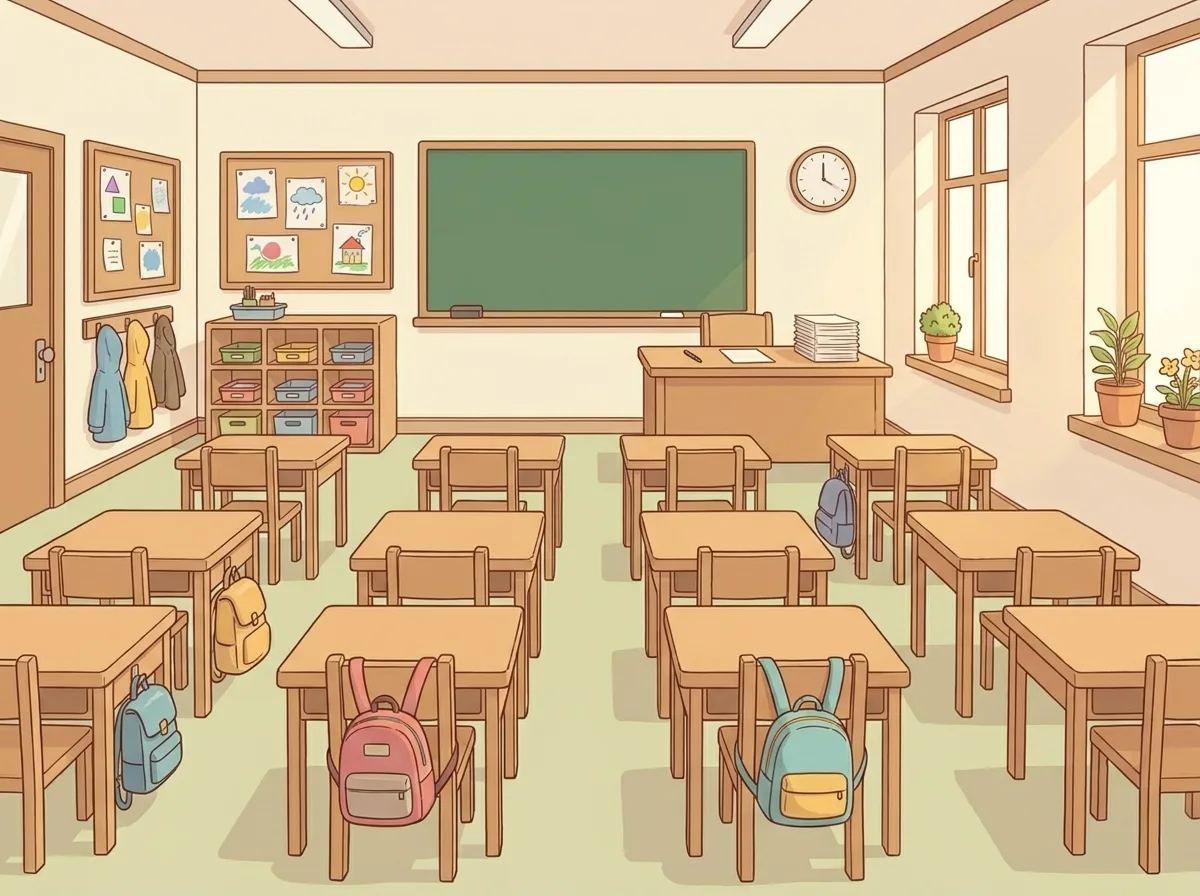
← Diario de RussafaS01E06 · aula del colegio
La circular clara
Capítulo sobre cómo una familia se maneja con los papeles del colegio: qué es solo información, qué pide respuesta —marcar, firmar y devolver a tiempo— y por qué canal habla de verdad el colegio con las familias.A chapter on how a family deals with paperwork from school: what is just for information, what needs a response — tick, sign and return on time — and which channel the school actually uses to talk to parents.
- Lo que vas a oírWhat you'll hear
- Oirás cómo el tutor recorre la circular punto por punto: dónde solo informa, dónde pide firmar y devolver, y cómo comprueba que la familia lo ha entendido.You will hear how the class teacher works through the newsletter point by point: where he is just informing, where he asks you to sign and return, and how he checks the family has understood.
- Lo que aprendesWhat you'll learn
- Aprendes a leer con calma una circular larga del colegio: separar la información de lo que hay que hacer, entender qué respuesta se espera de ti y no confundir el canal oficial del colegio con el chat de familias.You will learn to read a long school newsletter calmly: separate information from what needs doing, work out exactly what response is expected, and not confuse the school official channel with the parents chat.
Español útilUseful Spanish
- circularschool notice / newsletter
- autorizaciónpermission slip
- comedorschool canteen
- firmasignature
- excursiónschool trip
- Web Familia 2.0the official school portal
- app del colegiothe school app
Transcripción
Transcript
Toca una línea para oírla. Espacio: play/pausa · ← → 10 s · ↑ ↓ línea anterior/siguiente.Tap a line to hear it. Space: play/pause · ← → 10 s · ↑ ↓ previous/next line.
Lo siguiente en Diario de RussafaUp next in Diario de Russafa
Elige tu próxima escucha
Choose your next listen
← Episodio anteriorPrevious episode: El precio pequeño (A2-B1)
Resumen
Summary
La circular clara — Diario de Russafa, S01E06
Martes por la tarde. En la mesa de la cocina hay una circular del colegio para Leo: una hoja larga con apartados, casillas, una fecha límite y una línea de firma al final. La familia Sokolov decide no resolverla a solas y, al día siguiente después de clase, va al aula a hablar con Sergio, el tutor de Leo. El episodio enseña a leer una circular del colegio sin perderse: separar información de acción, distinguir el canal oficial del centro del chat informal de familias, marcar comedor, recortar la autorización y dejar firmada la línea correcta.
En el aula, Sergio toma la circular y la lee con la familia por apartados. Primero, el marco general: la excursión es el viernes, al museo, en autobús, con el aula de Leo y otra clase de segundo, con Sergio como tutor y profesorado de apoyo. Después, el horario: entrada normal a las nueve y salida normal a las cuatro y media. Anna pregunta por un mensaje confuso que vio en la app del colegio esa misma mañana sobre «salir media hora antes»; Sergio comprueba en su móvil que el aviso es del curso pasado, de una excursión de octubre al palmeral, y explica que la app no ordena los mensajes solo por fecha. La referencia para esta excursión sigue siendo la circular en papel. Y deja la frontera clara entre canales: Web Familia 2.0 para avisos oficiales del centro, la app del colegio para dudas concretas del tutor, el grupo de familias para recordatorios informales.
La parte que más se suele leer demasiado deprisa es la siguiente: autorización, comedor, horario, material y firma. Sergio los separa uno por uno. La autorización firmada es la acción imprescindible; sin ella, Leo no puede salir del centro. El comedor es una acción de organización: marcar sí o no, sin elegir menú. El horario es información: entrada y salida normales. El material es una acción sencilla: mochila pequeña, botella de agua, gorra, ropa cómoda; nada de juguetes ni dinero, y «libreta pequeña» solo si cabe (la circular nombra lo necesario, no todo lo posible). La firma va en la línea inferior; una firma de madre, padre o tutor legal es suficiente. Y la circular completa se queda en casa; lo que vuelve al colegio es solo la autorización firmada, en la carpeta roja de Leo, depositada en la bandeja azul del aula.
De vuelta en casa, Anna hace una hoja pequeña para la nevera con dos columnas: información (excursión, horario, canal oficial) y acción (firmar autorización, marcar comedor, preparar material, meter la autorización en la carpeta roja). No toca la circular original; hace su hoja al lado. Roman revisa por la noche que la carpeta esté preparada, con la autorización dentro y no encima. Leo escribe que la mochila se prueba antes de dormir, no en la puerta. La familia se queda con la regla: la circular y el canal del centro son la referencia; el grupo de familias ayuda a recordar, pero nada más; y la antelación es parte de la responsabilidad.
El resumen en tu idiomaThe summary in your language
La circular clara — Russafa Diary, S01E06
Tuesday afternoon. On the kitchen table there's a school circular for Leo: a long page with sections, checkboxes, a deadline, and a signature line at the end. The Sokolov family decides not to figure it out alone, and the next day after school they go to the classroom to talk with Sergio, Leo's tutor. The episode teaches how to read a school circular without getting lost: separate information from action, distinguish the official school channel from the informal parent chat, mark the comedor box, tear off the authorization, and sign the right line.
In the classroom, Sergio takes the circular and reads it with the family section by section. First the general frame: the excursion is on Friday, to the museum, by bus, with Leo's class and another second-grade group, with Sergio as tutor and supporting staff. Then the schedule: normal entry at nine and normal exit at four thirty. Anna asks about a confusing message she saw in the school app that very morning, about «leaving half an hour early»; Sergio checks on his phone that the notice is from last year, a previous excursion to the palmeral, and explains that the app doesn't sort messages by date alone. The reference for this excursion is still the paper circular. And he draws a clear line between channels: Web Familia 2.0 for official notices from the center, the school app for specific questions to the tutor, the parent group for informal reminders.
The part that tends to be read too quickly is what follows: authorization, comedor, schedule, material, and signature. Sergio separates them one by one. The signed authorization is the essential action; without it, Leo cannot leave the center. The comedor is an organization action: mark yes or no, no menu choice. The schedule is information: normal entry and exit. Material is a simple action: small backpack, water bottle, cap, comfortable clothes; no toys or money, and a «small notebook» only if it fits (the circular names what's necessary, not everything possible). The signature goes on the bottom line; one signature from mother, father, or legal guardian is enough. And the complete circular stays at home; what returns to school is only the signed authorization, in Leo's red folder, dropped in the classroom's blue tray.
Back home, Anna makes a small page for the fridge with two columns: information (excursion, schedule, official channel) and action (sign authorization, mark comedor, prepare material, put the authorization in the red folder). She doesn't touch the original circular; she makes her own page next to it. Roman checks at night that the folder is ready, with the authorization inside and not on top. Leo writes down that the backpack is tested before sleep, not at the door. The family settles on the rule: the circular and the school's channel are the reference; the parent group helps remember, but nothing more; and being early is part of the responsibility.
Glosario
Glossary
- tutor · sustantivo masculino (tutor) o femenino (tutora)
Profesor o profesora responsable de un grupo escolar; punto de contacto principal con las familias para todo lo relacionado con ese grupo.
Teacher in charge of a school group; main contact point with families for anything related to that group.«Sergio es el tutor de Leo.»
- reunión · sustantivo femenino
Encuentro presencial o por videollamada con el tutor para hablar de un alumno o aclarar dudas. Puede ser individual con una familia o colectiva con todas las del aula.
In-person or video meeting with the tutor to discuss a student or clarify questions. Can be individual with one family or collective with all families in the group.«Vamos a pedir una reunión con Sergio.»
- circular · sustantivo femenino
Aviso escrito que el colegio reparte a las familias con información organizada en apartados: excursión, autorización, horario, material, firma.
Written notice the school distributes to families with information organized in sections: excursion, authorization, schedule, material, signature.«La circular dice que la excursión es el viernes.»
- autorización · sustantivo femenino
Permiso escrito y firmado por madre, padre o tutor legal para que un niño participe en una actividad o salga del centro. Sin autorización, el alumno no puede ir a la excursión.
Written permission signed by mother, father, or legal guardian for a child to take part in an activity or leave the school grounds. Without authorization, the student cannot go on the excursion.«La autorización va en la carpeta roja.»
- comedor · sustantivo masculino
Servicio del colegio donde el alumno come al mediodía. En los días de excursión, las familias marcan si el alumno se queda al comedor o si lo recogen antes.
The school's lunch service. On excursion days, families mark whether the student stays for lunch or is picked up earlier.«Leo se queda al comedor los martes y viernes.»
- horario · sustantivo masculino
Horas de entrada, salida o actividad del centro. Un horario «normal» significa la misma entrada y salida que cualquier otro día.
School entry, exit, or activity hours. A «normal» horario means the same entry and exit as any other day.«Entrada normal a las nueve y salida normal a las cuatro y media.»
- excursión · sustantivo femenino
Salida del centro escolar con la clase, normalmente para visitar un museo, parque o instalación didáctica. Requiere autorización firmada y, a veces, información extra de material y comedor.
School outing with the class, normally to a museum, park, or educational facility. Requires signed authorization and sometimes extra information about material and comedor.«El viernes hay excursión al museo.»
- material · sustantivo masculino
Lo que el alumno tiene que llevar a la excursión o a clase. La circular lista lo necesario; no es lo mismo que todo lo posible.
What the student must bring to the excursion or class. The circular lists what's necessary; not the same as everything possible.«Material: mochila pequeña, botella de agua, gorra.»
- firma · sustantivo femenino
Nombre escrito a mano que confirma un permiso. En la autorización va en la línea inferior; una firma de madre, padre o tutor legal es suficiente.
Handwritten signature confirming a permission. On the authorization it goes on the bottom line; one signature from mother, father, or legal guardian is enough.«La firma va aquí, en esta línea.»
- familia · sustantivo femenino
Madre, padre o tutores legales de un alumno. El colegio se dirige a la familia, no a un solo adulto.
Mother, father, or legal guardians of a student. The school addresses the family, not a single adult.«Sergio habla con la familia, no solo con la madre.»
- aula · sustantivo femenino (con artículo masculino: el aula)
Clase física donde estudia un grupo escolar; también, por extensión, el grupo mismo y su tutor o tutora.
Physical classroom where a school group studies; by extension, also the group itself and its tutor.«Vamos al aula de Leo.»
- entrada · sustantivo femenino
Momento o puerta por la que el alumno entra al colegio por la mañana. «Entrada normal» significa a la hora habitual y por la puerta de siempre.
Time or door through which the student enters school in the morning. «Entrada normal» means at the usual time and through the usual door.«Entrada normal a las nueve.»
- salida · sustantivo femenino
Momento o puerta por la que el alumno sale del colegio o por la que la familia recoge al final del día.
Time or door through which the student leaves the school or is picked up at the end of the day.«Salida normal a las cuatro y media.»
- Web Familia 2.0 · nombre propio
Portal oficial de la Generalitat Valenciana (conectado con ITACA) usado por los centros para avisos generales del colegio. Es el canal por defecto cuando el centro tiene que comunicar algo formalmente.
Official Generalitat Valenciana portal (connected to ITACA) used by schools for general announcements. The default channel when the school needs to communicate something formally.«El centro avisa por Web Familia 2.0.»
- app del colegio · expresión nominal
Aplicación móvil que cada colegio usa para mensajes informales y dudas dirigidas al tutor o a la familia. No sustituye a Web Familia 2.0 para avisos oficiales.
Mobile application each school uses for informal messages and questions addressed to the tutor or the family. Does not replace Web Familia 2.0 for official notices.«Si tenéis una duda concreta de Leo, me escribís por la app del colegio.»